“This funding didn’t just provide people with certifications; it gave a community hope that the swimming pool would be able to survive and thrive — in a world where small communities are losing their pools on a regular basis.”
CHRIS WOO, COMMUNITY DEVELOPMENT & ENGAGEMENT MANAGER, TOWN OF PORT MCNEILL
Across the Strathcona Regional District on northern Vancouver Island, small communities are helping local residents gain water safety skills. Through Active Communities Grant funding, residents participated in Swim for Life Instructor courses, National Lifeguard certification courses, and lifesaving competitions. More local lifeguards and lifesaving instructors means that swimming lessons can be scheduled, and in some locations, these were free. Read on to learn more about how communities in Strathcona Regional District increased safe aquatics opportunities!
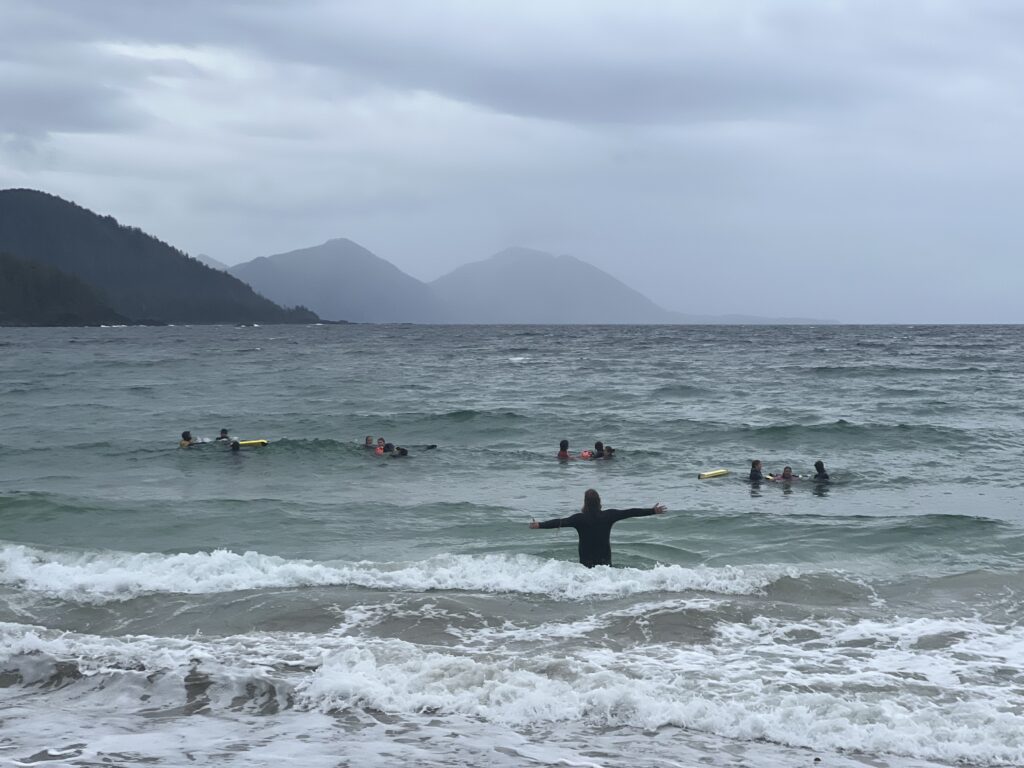
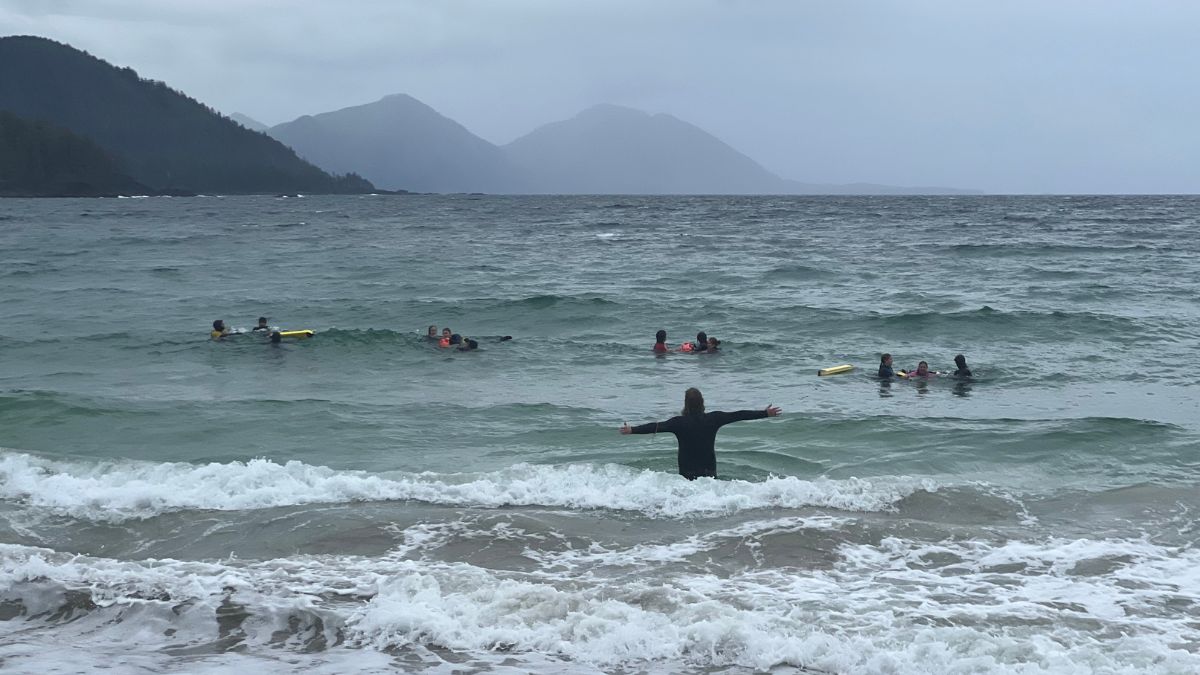
Training on what to do when a person goes missing in Grant Bay. © Strathcona Regional District.
The Anne Fiddick Aquatic Centre in Gold River, BC shares their experience:
For a small community, the high cost of aquatic certification can be a major deterrent for attracting new potential staff, especially students or low-income residents who might be well suited to the flexible work hours of being a lifeguard.
The Active Communities grant provided crucial funding that enabled the Anne Fiddick Aquatic Centre to offer a free Lifesaving Society Swim for Life Instructor course. Making the course free and delivered locally addressed travel and financial constraints, ensuring that personal commitment and interest, not financial means, determined who could get certified.
Having local, trained swim instructors meant that Gold River could offer swim lessons, which is a critical public safety measure. The program also created immediate and valuable skills for the aquatic staff. Lifeguards who completed the course are now delivering swim lessons through the Village of Gold River.
“The Free Swim for Life Instructor course has transformed the aquatic centre from a pool struggling to maintain certified lifeguards into a more vibrant pool with a reputation for developing new lifeguards and water skills sets in our community. The new instructors are local residents and as such, are more likely to stay in the community longer.” -Project Lead
Hear from a participant in the NL – Surf Course:
“Thanks to the grant, I had the opportunity to improve my water rescue skills in surf conditions at Grant Bay … [which] … enabled us to gain confidence in our abilities in the remote, ever-changing oceans.
I remember how excited everyone was as we were heading out. Then came our first full day— the sky was gray, the beach cold, and light rain came and went throughout the day. After spending hours in the cold salty water practicing different lifesaving rescue drills, we warmed up by the fire, before going back into the turbulent sea.
The natural environment and challenging conditions made the training feel more realistic, since not all water-related incidents happen on warm sunny days.
I am grateful to have attended [and] … I feel this course gives back to the community by training more people in outdoor water rescues, reduces financial barriers to outdoor learning, and provides new job opportunities.” – Course Participant
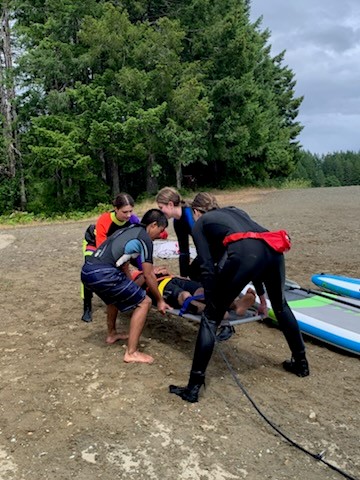
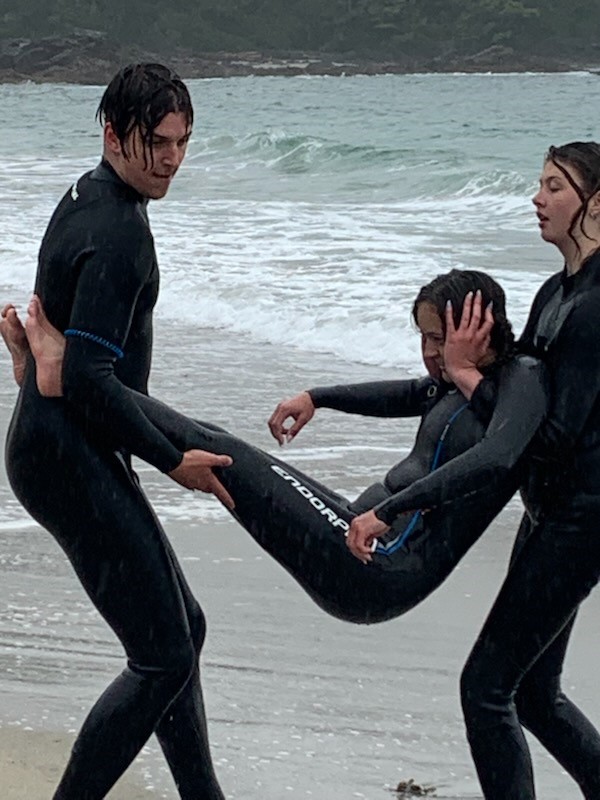
Lifesaving training in the surf at Grant Bay. © Strathcona Regional District.
Carihi Secondary School shares about the P.E. course they implemented:
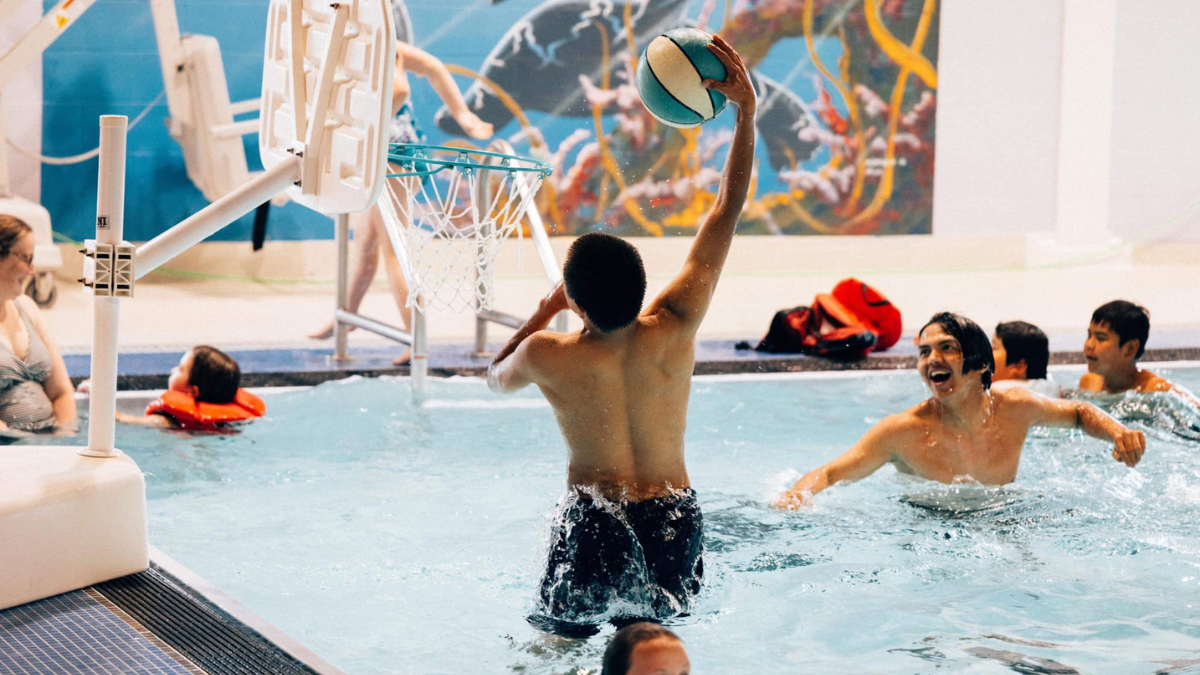
In the innovative Lifesaving Physical Education program, 24 students in grades 9-12 had the opportunity to get outside the school, into the community pool, and learn valuable swimming and lifesaving skills.
Many Carihi students live with low income and could not afford to take the training courses. Providing the aquatics training courses for free overcame the financial barrier and offering them locally within the school day overcame transportation and time challenges.
“This course provided a physical education class that fit outside the ‘mould’ of traditional PE classes. Many of our students found the aquatic-based PE to be a safe and inclusive environment where they felt comfortable being physically active and learning new skills.” -Teacher at Carihi Secondary School
Many students noted that it was their favourite course of the year and Carihi Secondary plans to continue with this course in the next school years.
Overall, more than 225 people have been involved in Strathcona Regional District’s Active Communities grant activities, most of them children and youth. Thank you to Shaun Koopman and all of the collaborators, volunteers, and participants who made this project a success!